

Analyzing the Future of Nvidia Stock
Nvidia is a powerhouse in the tech world. Known for its cutting-edge graphics processing units (GPUs), it has revolutionized gaming and AI.
The company’s stock, listed as NVDA on NASDAQ, has seen remarkable growth. This growth is driven by advancements in gaming, AI, and data centers.
However, the Nvidia stock price has been volatile. Market trends, tech advancements, and economic factors all play a role.
Investors are keenly watching Nvidia’s strategic moves. The acquisition of ARM Holdings is a significant development.
Nvidia’s financial performance remains strong. Consistent revenue growth and profitability are key highlights.
The rise of AI and machine learning offers new opportunities. Nvidia is well-positioned to capitalize on these trends.
Analysts have mixed views on Nvidia stock price prediction 2030. Some foresee growth, while others warn of risks.
Understanding Nvidia’s market position and future prospects is crucial. This article delves into these aspects.

Join us as we analyze Nvidia’s stock and its future potential.
Understanding Nvidia: Company Overview and Market Position
Nvidia is at the forefront of the technology industry. It specializes in designing GPUs that enhance computing performance. These chips power everything from gaming consoles to supercomputers.
Founded in 1993, the company has consistently led in innovation. Its products cater to both consumer and enterprise markets, broadening its customer base. The company operates globally, with significant presence in North America, Asia, and Europe.
Nvidia’s brand is synonymous with high-quality graphics and artificial intelligence. Its technology is integral to gaming and crucial in emerging fields like machine learning.
Innovation is a core part of Nvidia’s strategy. The company invests heavily in research and development. This focus drives its competitive edge and ensures continued relevance in a fast-changing industry.
Nvidia’s reach extends into several key markets:
- Gaming: Renowned for its advanced graphics performance.
- Data Centers: Serving cloud computing and enterprise needs.
- Automotive: Pioneering self-driving technology.
- AI and Machine Learning: Leading with NVIDIA AI platforms.
The company faces stiff competition from industry giants like AMD and Intel. Yet, its technological prowess ensures a formidable market position. Analysts continue to see Nvidia as a leader in innovation and market execution.
Nvidia’s commitment to sustainability and efficient technologies also appeal to investors. This focus not only benefits the environment but also reduces operational costs.
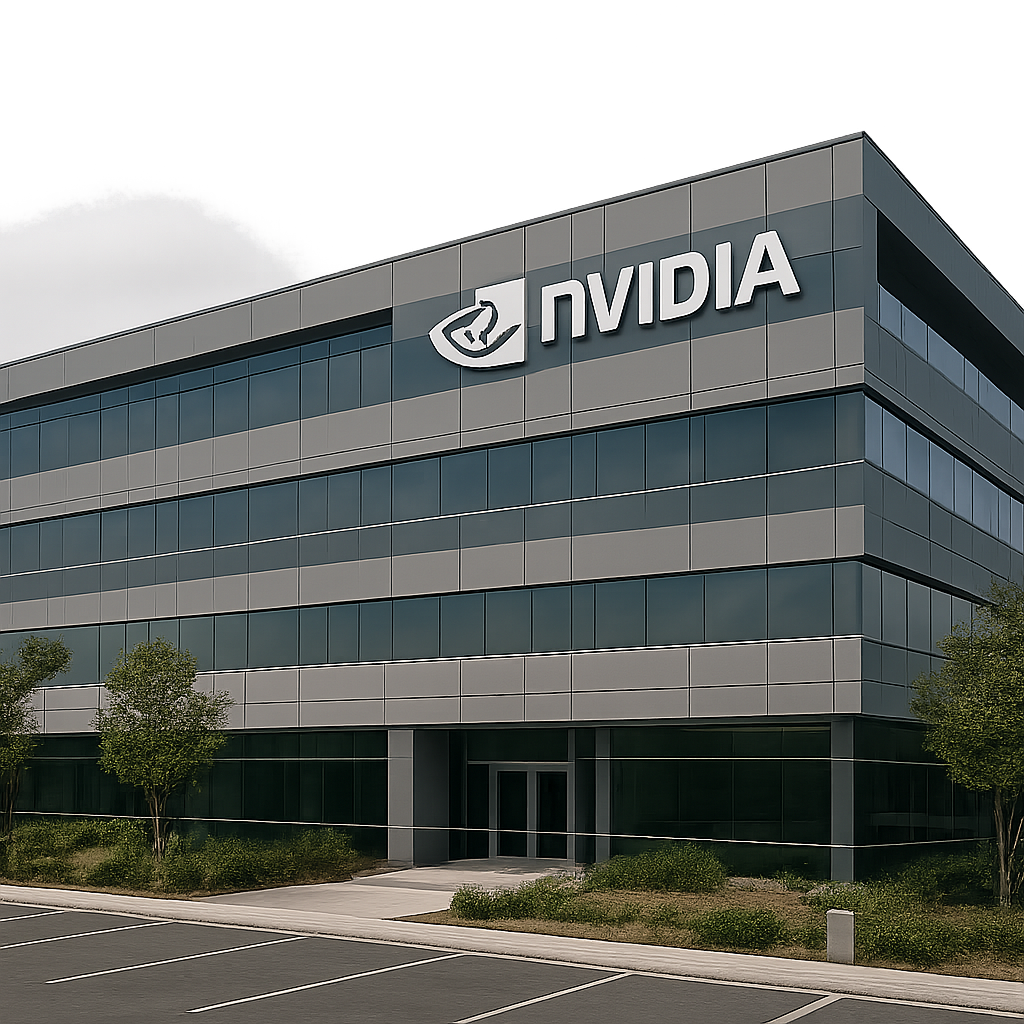
Understanding Nvidia’s market position provides insights into its potential for future growth. Its ability to adapt and innovate remains a key strength.
Historical Performance of Nvidia Stock (NVDA)
Nvidia’s stock, listed as NVDA on NASDAQ, has seen significant appreciation over the years. The company’s growth trajectory parallels the expanding needs of digital technology.
In the early 2000s, NVDA stock mirrored the tech bubble’s fluctuations. It initially soared, then declined sharply during the bust. As markets stabilized, Nvidia leveraged the rise of PC gaming to regain momentum.
The late 2000s brought new challenges and opportunities. Nvidia diversified beyond graphics, betting on AI and parallel computing. This strategic pivot paid dividends as its applications broadened.
Over the past decade, NVDA stock has been a standout performer. Investors have watched its price multiply with interest. Catalysts include advancements in GPU technologies and successful market penetration.
Recent years have seen rapid growth as the demand for AI and gaming expanded exponentially. Nvidia’s innovation in these sectors is highly regarded. This reputation helped propel its stock price to new heights.
Nvidia’s performance has been marked by significant volatility. This is due to broader market trends and industry-specific shifts. A close analysis reveals several patterns worth noting:
- Initial public offerings and tech bubbles
- Major technological innovations
- Key acquisitions and partnerships
- Regulatory developments and supply chain impacts
The company’s historical stock trends offer insights into its resilience. Navigating through highs and lows has been a testament to its robust strategy and market adaptability.
Investors continually eye NVDA for its potential upside. Tracking its past performance helps in predicting possible future movements. Understanding these dynamics is crucial for crafting successful investment strategies.

Key Milestones in Nvidia’s Stock Price History
Nvidia’s journey from its IPO in 1999 to becoming a market leader is impressive. Each phase of its growth tells a story of innovation and strategy.
The stock price initially spiked post-IPO, buoyed by tech euphoria. However, the burst of the dot-com bubble led to a significant correction. This was a formative period for Nvidia.
The 2008 financial crisis presented another downturn. Yet, Nvidia emerged stronger by 2010. It capitalized on the booming gaming industry, which provided a solid foundation for recovery.
The introduction of its groundbreaking Pascal architecture in 2016 marked a turning point. This innovation spurred a new era of growth. Investors saw the stock price reach unprecedented levels.
In 2020, Nvidia announced its acquisition of ARM Holdings. This strategic move was poised to reshape its competitive landscape. Market anticipation led to a spike in NVDA stock.
Today, Nvidia’s stock story is characterized by:
- Early volatility and dot-com bubble impacts
- Recovery and consolidation in the late 2000s
- Breakthrough innovations fueling growth
- Strategic acquisitions triggering market reactions
These milestones provide valuable insights for understanding Nvidia’s stock dynamics. They highlight the blend of risk and opportunity inherent in tech stocks.
Major Events Impacting NVDA Stock
Several events have significantly influenced Nvidia’s stock. Understanding these helps grasp the stock’s historical performance and future potential.
Regulatory shifts often impact Nvidia, especially in international markets. Such developments can cause temporary fluctuations in stock price. Monitoring these factors is crucial for investors.
Technological advancements drive Nvidia’s core growth. Each major release, such as GPU upgrades, impacts stock momentum. These events often correlate with increased investor confidence and stock gains.
Acquisitions have played a strategic role for Nvidia. The ARM Holdings deal stands out as transformative. It promises to enhance Nvidia’s market reach and technological capabilities.
Economic downturns, like the 2008 crisis, test Nvidia’s resilience. While initially affected, the company has shown remarkable recovery capability. This resilience enhances its stock’s attractiveness.
Global supply chain disruptions remain a challenge. They can impact Nvidia’s stock by affecting production timelines. Investors closely watch how the company navigates these complexities.
Significant events impacting NVDA stock include:
- Regulatory changes in key markets
- Major technological releases
- Strategic acquisitions and their outcomes
- Economic challenges and recovery efforts
- Supply chain disruptions and resolutions
Analyzing these events offers insights into NVDA’s stock movements. They underscore the importance of agility and strategic foresight in navigating the tech industry.

Current Nvidia Stock Price Analysis
The current analysis of Nvidia’s stock price involves understanding its performance within the broader market context. Nvidia remains a technology powerhouse.
Recent months have seen NVDA experiencing volatility. This reflects overall market conditions and sector-specific dynamics. Investors remain attentive to these shifts.
Nvidia’s stock price is sensitive to tech industry trends. Its correlation with digital transformation advances is notable. These include growth in AI, cloud computing, and data centers.
Market sentiment also sways NVDA’s valuation. The company’s innovation track record sustains investor confidence. However, macroeconomic factors still play a decisive role.
Earnings reports and new product launches often trigger stock price movements. These events provide vital financial health indicators. A positive report can create an upward price momentum.
The Nvidia stock price is often affected by supply chain complications. This includes chip shortages that may hinder production. Market analysts keep a close watch on how Nvidia mitigates these risks.
A comprehensive stock analysis considers:
- Recent volatility and market reactions
- Tech industry trends influencing Nvidia
- Market sentiment and innovation impacts
- Financial results and product launches
- Supply chain challenges
Understanding these factors enriches the investment narrative around NVDA. It provides a clear picture of the stock’s potential directions.

Recent Financial Results and Earnings Reports
Nvidia’s recent financial results illuminate its robust market position. The company has consistently demonstrated strong revenue growth. This underpins investor confidence.
The latest earnings report showcases impressive revenue figures. Key business segments, including gaming and data centers, contribute substantially. These pillars of growth are crucial.
Product innovation fuels these financial results. Recent GPU releases have widened Nvidia’s market reach. Consumer response to these products remains overwhelmingly positive.
Expenses and profitability are watched closely. Nvidia’s continuous R&D investment supports future growth strategies. This impacts short-term profitability but promises long-term gains.
Moreover, Nvidia’s financial health is emphasized by its balance sheet. Strong cash flow and manageable debt levels are notable. These factors provide a cushion during economic uncertainties.
Earnings reports also highlight geographical market performance. Nvidia expands its footprint globally, adapting to diverse market conditions. Regional contributions vary but collectively enhance growth.
Key insights from recent financials include:
- Strong revenue from gaming and data centers
- Product innovation driving market success
- R&D investments affecting short-term profits
- Healthy cash flow and debt management
- Expanding global market presence
These elements critically inform Nvidia’s investment narrative. They set the stage for future opportunities.

Analyst Ratings and Price Targets
Analysts regularly assess Nvidia stock. Their ratings and price targets reflect expert insights. These guide investor decision-making.
Recent analyst opinions on NVDA vary. Most indicate a positive outlook. Nvidia’s innovation capacity and market leadership underscore these ratings.
Price targets for Nvidia stock are influenced by various factors. Analysts evaluate technological developments and market trends. These assessments align with Nvidia’s strategic objectives.
Analysts project both short and long-term price targets. These projections require careful scrutiny. Investors use these to gauge possible price movements.
The consensus often underpins bullish forecasts. Nvidia’s position in AI and gaming markets supports this. Price targets remain subject to change due to market dynamics.
Key considerations impacting analyst views include:
- Nvidia’s market leadership
- Innovations and product developments
- Strategic objectives and growth prospects
- Market and technological trends
- Bullish consensus based on current conditions
These insights shape potential investor strategies. Analyst ratings continue to play a pivotal role in NVDA stock evaluations. They offer essential foresight into market expectations.
Key Drivers of Nvidia’s Stock Price
Several factors drive Nvidia’s stock price. Technological innovation tops the list, consistently capturing investor enthusiasm. Nvidia’s cutting-edge technologies position it as an industry leader.
Next, market demand for Nvidia’s products significantly affects its stock price. Demand fluctuates based on technological advancements in AI, gaming, and data centers. These sectors are Nvidia’s strongholds.
Economic factors play a crucial role, too. Interest rates and inflation can impact investment attractiveness. Nvidia’s ability to weather these changes influences its stock performance.
Competitive positioning is another key driver. Nvidia faces intense competition from companies like AMD and Intel. Market movements in these rivals can send ripple effects through Nvidia’s stock valuation.
Investments in strategic partnerships bolster Nvidia’s market stance. Collaborations with other tech giants increase its technological reach and business prospects. Each partnership potentially propels stock appreciation.
Supply chain management affects Nvidia’s operational efficiency. Smooth operations translate to consistent product availability, influencing investor perception. Conversely, disruptions can negatively impact stock prices.
Finally, Nvidia’s financial health underpins its stock stability. Solid revenue streams and cash flow engender investor confidence. This results in more robust stock pricing.
Key drivers include:
- Technological innovation
- Market demand for products
- Economic conditions
- Competitive positioning
- Strategic partnerships
- Supply chain management
- Strong financial performance
Understanding these drivers aids investors in forecasting potential stock trajectories.

Technological Innovations and Product Pipeline
Nvidia’s continuous innovation ensures its competitive edge. It focuses on AI, graphics processing, and next-gen technologies. These innovations are pivotal in Nvidia’s product pipeline.
The company frequently launches state-of-the-art GPUs. Recent releases have bolstered Nvidia’s market dominance. Superior performance and efficiency attract a broad consumer base.
Nvidia’s investment in AI is noteworthy. It develops chips that enhance machine learning capabilities. This is crucial as industries shift towards automated solutions.
Automotive technologies, including self-driving capabilities, are part of the pipeline. Nvidia collaborates with automotive giants to advance this sector. It underscores Nvidia’s versatile technological prowess.
Nvidia’s focus extends to edge computing. It plans to introduce products that process data closer to its source. This enhances speed and efficiency across IoT devices.
The advancement of its software ecosystem strengthens its market position. Nvidia’s CUDA toolkit facilitates diverse applications. This provides developers with robust tools for innovation.
Key pipeline focus areas:
- State-of-the-art GPUs
- AI and machine learning enhancements
- Automotive technologies
- Edge computing
- Software ecosystem development
Nvidia’s commitment to these innovations secures its market leadership. It remains poised for future growth.

Strategic Acquisitions and Partnerships
Nvidia’s strategic acquisitions bolster its market strength. These moves expand its technological capabilities. For instance, acquiring ARM Holdings illustrates Nvidia’s commitment to innovation.
Partnerships form another pillar of Nvidia’s strategy. Collaborating with tech leaders extends its industry reach. These relationships enhance its product offerings and market influence.
Each acquisition is carefully curated to align with Nvidia’s goals. The ARM deal aims to integrate innovative CPU designs. This enhances Nvidia’s market adaptability and technological scope.
Partnerships drive mutual benefits. Collaborations extend across gaming, AI, and beyond. Nvidia capitalizes on this to introduce groundbreaking products.
Key partnerships increase Nvidia’s brand presence. Collaborations with automotive manufacturers illustrate this. These deals propel Nvidia’s automotive technology forward.
Strategic moves are fundamental to sustaining competitive advantages. Nvidia’s foresight in acquisitions and partnerships exemplifies this. It ensures the company remains at the forefront of technology.
Key strategic focuses include:
- ARM Holdings acquisition
- Partnerships with leading tech firms
- Collaboration in gaming and AI
- Automotive sector collaborations
- Brand presence expansion
Through acquisitions and partnerships, Nvidia solidifies its industry leadership. Its strategic foresight paves the way for continued success.

Nvidia’s Competitive Landscape
Nvidia operates in a fiercely competitive environment. Its main rivals are household names like AMD and Intel. Each company vies for dominance in the technology market.
The competition is particularly intense in graphics processing. Nvidia’s leadership in GPUs is well-established. However, its competitors are continually striving to close the gap.
Apart from GPUs, Nvidia faces competition in AI and data centers. Innovations in these areas are pivotal for tech companies. This keeps Nvidia on its toes, pushing for constant innovation.
Market share fluctuations are common. Each company’s technological advancements influence their market standing. Success hinges on innovation and execution.
Nvidia must continuously adapt to maintain its lead. This means investing in R&D and leveraging strategic partnerships. Its agility in responding to competitor moves is crucial.
Key competitive factors include:
- Advancements in GPU technology
- Developments in AI and data centers
- Market share and industry trends
Navigating these challenges is crucial for Nvidia’s sustained success. Its competitive landscape requires constant vigilance and adaptation.

Nvidia vs. AMD, Intel, and Other Competitors
Nvidia’s competition with AMD and Intel is legendary. Each firm has carved out a niche, jostling for industry prominence. This rivalry fuels rapid technological development.
AMD competes fiercely on price and performance. Its GPUs are a popular alternative to Nvidia’s. The rivalry pushes both companies towards relentless innovation.
Intel, while dominant in CPUs, is expanding in GPUs and AI. Its initiatives aim to capture market segments traditionally held by Nvidia. This expansion forces Nvidia to innovate constantly.
Competitors like Qualcomm and ARM are also making strides. Their focus on specialized processors poses unique challenges. Nvidia must therefore diversify its offerings to remain ahead.
These industry titans engage in a relentless battle for market share. Each player impacts the strategic decisions of others. This dynamic spurs constant development of new technologies.
Competitive considerations include:
- Performance and pricing strategies
- Technological advancements
- Expansion into new markets
Navigating these rivalries requires strategic foresight. Nvidia’s responses shape its long-term success in the industry.

Risks and Challenges Facing Nvidia
Nvidia faces numerous risks in its business operations. These risks can impact its stock and overall performance. Identifying and managing them is crucial for long-term success.
Economic downturns present significant challenges. Market volatility can affect investor confidence. This can lead to shifts in Nvidia stock price.
Technological obsolescence is another risk. The rapid pace of innovation demands ongoing investment in R&D. Failure to innovate could lead to a decline in market leadership.
Competition remains a constant threat. Rivals are continually developing new technologies. Nvidia must respond quickly to maintain its edge.
Legal and regulatory challenges also pose risks. Compliance with global regulations is essential. Non-compliance could result in hefty fines and reputational damage.
Environmental factors are gaining attention. Investors increasingly favor companies with strong sustainability practices. Nvidia’s focus on energy-efficient technologies is crucial here.
Risks involve:
- Economic cycles and investor sentiment
- Technological change and innovation demands
- Legal compliance and environmental concerns
Understanding these challenges helps Nvidia navigate them effectively. Strategic planning and adaptability are key to overcoming these issues.

Regulatory, Geopolitical, and Supply Chain Risks
Nvidia must navigate complex regulatory landscapes. Global operations require adherence to diverse laws. Regulatory changes can disrupt business operations and impact the Nvidia stock price.
Geopolitical tensions add layers of uncertainty. Trade conflicts may affect component supply chains. Such disruptions can lead to production delays and increased costs.
Supply chain issues remain an ongoing challenge. Semiconductor shortages have affected many tech companies. Nvidia must manage its inventory and procurement strategies carefully.
Tariffs can influence production costs and pricing strategies. When tariffs rise, they can directly impact profit margins. Maintaining competitive pricing requires strategic adjustments.
Nvidia’s reliance on external manufacturers can be risky. Supplier issues could delay product releases. Effective supply chain management is critical to mitigate these risks.
Considerations include:
- Compliance with varying global regulations
- Managing geopolitical tensions and trade policies
- Navigating supply chain disruptions
Addressing these factors is crucial for sustained growth. Careful planning and strategic partnerships can help mitigate their impact.

Growth Opportunities for Nvidia
Nvidia stands at the forefront of several burgeoning markets. These markets offer promising growth opportunities. By leveraging technology and innovation, Nvidia can expand its influence significantly.
In gaming, Nvidia continues to dominate. It’s driving innovation with cutting-edge GPUs. This sector remains a stable and profitable market for Nvidia.
Artificial intelligence is a pivotal area for growth. Nvidia’s GPUs power many AI applications. This positions the company as a leader in AI infrastructure.
The data center market is another opportunity. Demand for high-performance computing has surged. Nvidia’s products cater to this rising demand effectively.
The automotive industry presents significant potential. Nvidia’s technology powers many autonomous vehicle systems. This market is poised for expansion.
Nvidia is also eyeing new sectors. These include edge computing and the metaverse. Each represents vast opportunities for revenue growth.
Key areas driving growth:
- Gaming and AI technologies
- Data centers and cloud computing
- Automotive systems and edge solutions
These markets highlight Nvidia’s potential for future expansion. Strategic investments in these areas are critical. The company’s proactive approach bodes well for sustainable growth.

AI, Data Centers, and the Metaverse
Artificial intelligence offers immense possibilities. Nvidia’s GPUs support sophisticated AI models and simulations. This makes it indispensable in AI research and applications.
Data centers rely heavily on Nvidia’s technology. Businesses need powerful infrastructure to handle big data. Nvidia meets these demands with efficient and scalable solutions.
The metaverse is emerging as a new frontier. It combines virtual reality, digital assets, and social connections. Nvidia’s advanced GPUs could play a critical role here.
AI, data centers, and the metaverse all drive demand. Nvidia is strategically positioned in each sector. This could substantially boost its revenue and market share.
These areas show continued growth potential. The convergence of AI, data demands, and virtual worlds is significant. Such integration enhances Nvidia’s competitive edge.
Critical growth drivers:
- AI advancements fueling innovation
- Rising data center demands and high performance computing
- Emerging metaverse technologies and virtual worlds
By focusing on these sectors, Nvidia can maintain its market leadership. Strategic innovation ensures its relevance and continued success.

Expansion into New Markets: Automotive, Edge Computing, and Beyond
The automotive industry is undergoing a transformation. Nvidia’s technology plays a significant role in autonomous vehicles. This sector offers immense potential for future growth.
Edge computing is another promising area. It involves processing data closer to its source. Nvidia’s solutions can facilitate rapid data processing and real-time decision-making.
Beyond these, Nvidia explores other innovative sectors. Its focus spans healthcare, fintech, and scientific research. Each sector benefits from Nvidia’s advanced computing capabilities.
The expansion beyond traditional markets signifies forward-thinking. Nvidia’s strategic vision aligns with emerging global trends. This ensures its adaptability and sustained leadership.
In summary, the growth in these sectors depends on technology integration. They offer vast opportunities for revenue diversification. Nvidia’s expansion strategy reflects its commitment to innovation.
Notable expansion fronts:
- Advancements in autonomous vehicle technology
- Edge computing technologies for real-time data processing
- Exploration into diverse sectors like healthcare and finance
Nvidia’s strategic diversification bolsters its growth. It’s positioned to capitalize on future technological advancements.

Nvidia Stock Price Prediction 2030: Expert Opinions and Models
Predicting Nvidia’s stock price in 2030 involves analyzing various factors and expert opinions. Analysts adopt complex models and consider market trends. Their forecasts reflect expected industry developments and financial strategies.
Expert opinions are divided. Some analysts hold a bullish view, expecting significant growth. They cite Nvidia’s leadership in GPU technology and AI. They believe these factors will drive substantial revenue increases.
Others express caution. They highlight potential challenges Nvidia may face. These include increased competition and regulatory hurdles. Such concerns cast uncertainty on long-term price stability.
Modeling techniques vary widely among experts. Quantitative models use historical data to generate forecasts. They consider variables like earnings growth and economic conditions.
Qualitative assessments add context. Analysts assess Nvidia’s market position and strategic initiatives. They evaluate how these factors may impact future stock performance.
Several experts build predictions on Nvidia’s diversification efforts. They focus on the company’s expansion into new sectors. This includes sectors like AI, automotive, and edge computing.
A few analysts emphasize global economic factors. They argue macroeconomic conditions will heavily influence Nvidia’s stock price. These include inflation rates and global trade dynamics.
Some key elements affecting Nvidia’s future price predictions include:
- Strategic market expansions
- Innovations in AI and technology
- Global economic conditions
Investors should weigh these analyses. Understanding various perspectives helps investors form balanced expectations. Careful consideration of both optimistic and cautious views offers comprehensive insights.

Bullish and Bearish Scenarios for 2030
In bullish scenarios, Nvidia continues to dominate the GPU market. Strong demand for AI and gaming technologies fuels growth. This leads to significant stock price appreciation by 2030.
Strategic acquisitions and partnerships play critical roles. They strengthen Nvidia’s market position and technological capabilities. Analysts predict enhanced market reach and revenue streams.
Growth in data centers and AI infrastructure bolsters Nvidia. These sectors are expected to expand vastly over the next decade. Nvidia’s stock thrives as a result.
In contrast, bearish scenarios consider risk factors. High competition from companies like AMD could erode market share. Additionally, potential regulatory challenges and legal concerns pose threats.
Economic downturns and global crises could depress demand. Such conditions hamper Nvidia’s revenue growth. Additionally, supply chain disruptions impact production and profitability.
Some significant factors in both scenarios include:
- Competitive dynamics within the technology sector
- Regulatory environments and compliance issues
- Economic stability and geopolitical influences
Analysts urge investors to consider both scenarios for holistic planning. A balanced understanding helps in preparing for diverse outcomes.

Factors Influencing Long-Term Price Predictions
Several factors influence Nvidia’s long-term stock predictions. Technological innovation remains a primary driver. Nvidia’s continuous advancements in GPUs and AI are vital.
Market demand for AI and data centers will significantly impact performance. Analysts highlight these as primary revenue sources. Their growth trajectory affects Nvidia’s stock profoundly.
Global economic trends factor heavily into predictions. Inflation rates and trade policies are notable influences. They affect both operational costs and market demand for Nvidia’s products.
Competitive landscape assessments are crucial. Analysts compare Nvidia with firms like AMD and Intel. They evaluate Nvidia’s strategic responses to competitive pressures.
Regulatory conditions also play a role in long-term forecasts. Changes in laws affecting technology companies pose significant implications. Nvidia needs to navigate these effectively.
Critical influencers for long-term predictions include:
- Innovation in product development
- Market demand and economic trends
- Competitive strategies and regulatory compliance
These factors together shape expert predictions for Nvidia by 2030. They require thorough analysis for accurate future projections.

Investment Strategies for NVDA Stock
Investing in Nvidia stock requires strategic planning. Investors must decide their approach based on personal goals. Understanding market dynamics and Nvidia’s potential helps shape investment strategies.
Long-term strategies focus on growth potential. These investors hold NVDA stock for years. They benefit from Nvidia’s innovation and market dominance over time.
Short-term strategies emphasize quick returns. Traders actively buy and sell NVDA stock. They capitalize on market fluctuations and earnings announcements.
Deciding between long-term and short-term depends on risk tolerance. Long-term holders often tolerate more volatility. Short-term traders accept the risks for the chance of immediate profits.
Analyzing Nvidia’s competitive position is essential. Investments align better with solid technological leadership. Nvidia consistently demonstrates such leadership in the GPU market.
Diversification is crucial in managing risk. NVDA stock should be part of a broader portfolio. This approach reduces exposure to any single stock’s volatility.
Monitoring market trends and company developments can refine strategies. Staying informed helps investors make timely decisions. It ensures alignment with Nvidia’s evolving market context.
Key investment strategy elements include:
- Aligning with personal investment goals
- Evaluating risk tolerance and market understanding
- Monitoring Nvidia’s innovations and strategic moves
Choosing the right approach maximizes potential returns. Investors benefit from a clear plan tailored to Nvidia’s prospects.

Long-Term vs. Short-Term Approaches
Long-term investment in NVDA is for patient investors. They believe in Nvidia’s growth potential. This approach benefits from cumulative gains over years.
Short-term strategies appeal to those seeking quicker profits. These traders leverage Nvidia’s market news and trends. They react swiftly to stock price movements.
Long-term holders focus on Nvidia’s fundamental strengths. They look at growth drivers, like AI and data centers. Market leadership and innovation reassure these investors.
Short-term investors often use technical analysis. They study price patterns and market indicators. Timely trades capitalize on Nvidia’s stock volatility.
Both approaches require a keen understanding of the market. Each strategy has its own risks and rewards. Aligning choice with financial goals is crucial.
Key considerations for choosing an investment approach include:
- Financial goals and investment timeline
- Understanding of market trends and Nvidia’s role
- Willingness to actively manage or hold investments
A clear preference for long-term security or short-term gain will guide decisions. Ultimately, the choice should fit individual financial objectives.

Portfolio Diversification and Risk Management
Diversification is key in investment success. It involves spreading investments across various assets. This strategy reduces exposure to a single stock’s risk.
Including NVDA stock in a diverse portfolio balances potential returns. Nvidia’s strong market performance adds growth opportunities. Yet, balancing its volatility with other assets is prudent.
Risk management strategies should accompany NVDA investments. Understanding Nvidia’s market volatility helps plan effective hedges. Investors can use options or stop-loss strategies.
Global market fluctuations impact all stocks. Setting investment limits protects against unexpected downturns. It creates a cushion during turbulent times.
Regular portfolio review is vital. Staying updated on Nvidia’s performance keeps strategies aligned. This proactive approach adapts to market changes.
Key elements of diversification and risk management include:
- Mixing stocks, bonds, and other assets
- Using options and stop-loss to hedge risks
- Regularly reviewing portfolio allocations
Adopting these methods ensures a balanced approach. Investors mitigate risks while positioning NVDA stock effectively.

Frequently Asked Questions about Nvidia Stock
Investing in Nvidia stock often raises common queries. Understanding these aspects assists in making informed decisions.
What is Nvidia’s primary market focus? Nvidia leads in GPU technology, AI, and data centers. These sectors drive its stock growth.
How does Nvidia’s performance compare to competitors? Nvidia competes with firms like AMD and Intel. Its innovation provides a competitive edge.
What influences Nvidia stock price changes? Market trends, technological advancements, and earnings reports affect NVDA stock price.
Is Nvidia stock suitable for long-term investment? Many view Nvidia as a long-term investment due to its market leadership and innovation.
What are potential risks of investing in Nvidia? Market volatility and technological shifts pose risks. Diversification helps mitigate them.
Key points for potential investors:
- Nvidia’s primary technologies and markets
- Competitive position against industry peers
- Major factors affecting stock price movements
Knowing these answers aids strategic NVDA stock investment.
Conclusion: Is Nvidia a Good Investment for the Future?
Deciding if Nvidia is a worthy investment requires evaluating various factors. Nvidia is a front-runner in GPU technology and AI innovation.
Its consistent revenue growth and market expansion strategies bolster its attractiveness. The future looks promising, yet caution is advised.
Key Investment Considerations:
- Market Leadership: Dominance in GPU and AI sectors.
- Growth Potential: Expansion in AI and data centers.
- Risks: Volatility from market competition and tech shifts.
Investors should weigh Nvidia’s strengths against potential risks. Diversification can help balance these aspects in a portfolio.
Nvidia’s innovative outlook seems bright. However, assessing individual goals and risk tolerance is crucial.

