
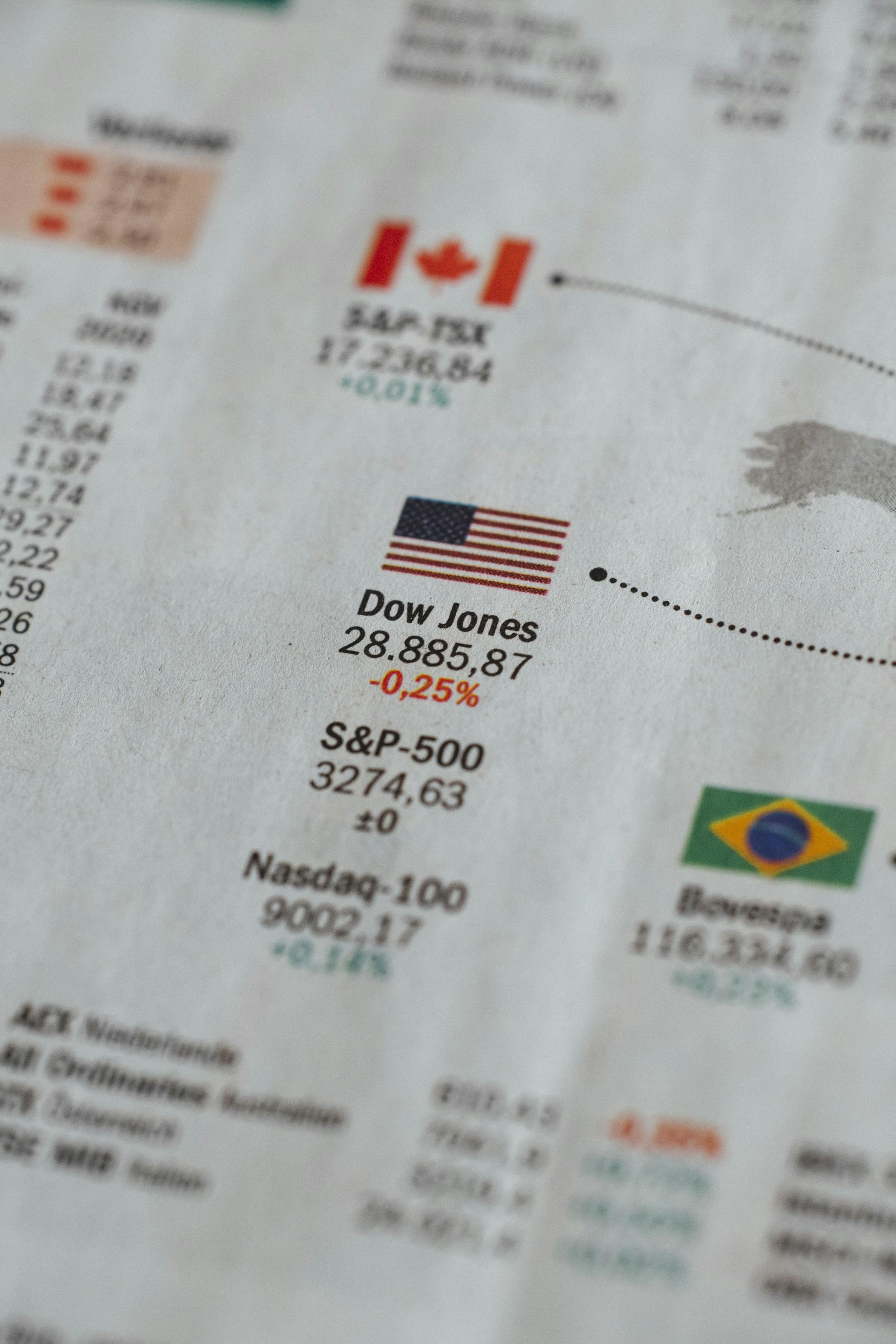
Introduction to the WSJ Dollar Index
The WSJ Dollar Index serves as a crucial tool in assessing the performance of the U.S. dollar against a diverse selection of foreign currencies. Specifically designed to reflect the value of the dollar relative to a basket of 16 major world currencies, this index is regarded as an essential benchmark for traders, investors, and economists. It is published by The Wall Street Journal and has gained significant attention due to its insightful metrics that inform a wide range of economic analyses.
One of the primary functions of the WSJ Dollar Index is to gauge the strength and stability of the U.S. dollar in the context of global trade relationships. By comparing the dollar’s performance against multiple currencies, such as the Euro, Japanese yen, and British pound, the index provides a comprehensive overview of international monetary dynamics. This multi-currency approach helps stakeholders understand how economic indicators in the U.S. impact global market movements and vice versa.
Traders often rely on the WSJ Dollar Index to formulate effective trading strategies based on currency fluctuations and market sentiments. This reliance stems from the fact that changes in the dollar’s value can have widespread implications on commodity prices, interest rates, and financial markets. For investors, the index acts as a barometer for assessing potential returns, while also signifying the overall health of the economy.
Moreover, economists utilize this index to draw conclusions about economic trends and forecast future movements in currency values, thereby aiding in policy-making and investment decisions. Consequently, the WSJ Dollar Index remains a pertinent gauge of the U.S. dollar’s positioning within the broader economic landscape, reflecting both domestic stability and global market concerns.
Factors Influencing the Recent Increase
The recent 0.6% rise in the WSJ Dollar Index to 95.49 can be attributed to several interconnected factors that reflect the dynamics of the global economy and currency markets. A primary driver of this increase has been the release of recent economic data from the United States, which has generally surpassed analysts’ expectations. Strong labor market figures, including lower unemployment rates and solid job growth, have positively influenced perceptions of the U.S. economy, thereby boosting the dollar’s strength in comparison to other currencies.
In addition to favorable economic data, shifts in monetary policy have also played a crucial role. The Federal Reserve’s latest announcements regarding interest rates indicate a cautious approach to any potential increases. As market participants anticipate a prolonged period of stable monetary policy, the dollar’s appeal as a safe-haven currency has intensified. Investors tend to gravitate towards the U.S. dollar during times of uncertainty, particularly in contrast to economies where monetary policy is less predictable. This has naturally affected the WSJ Dollar Index positively.
Geopolitical events have further contributed to the dollar’s recent strength. Global instability can often lead to increased demand for the U.S. dollar as a global reserve currency. Events such as tensions between major economies or political shifts can lead to fluctuations in currency values. For instance, escalating trade tensions between various nations prompt investors to reassess their portfolio allocations, frequently resulting in a higher demand for the dollar. Expert insights suggest that these geopolitical factors, coupled with economic indicators and monetary policy will continue to influence the trajectory of the WSJ Dollar Index in the near future.
Impact of the Dollar Strength on Global Markets
The recent rise in the WSJ Dollar Index, which now stands at 95.49 following a 0.6% increase, has significant implications for global financial markets. A stronger dollar often reflects investor confidence in the U.S. economy, yet it can also lead to several repercussions on emerging markets. For countries that have debts denominated in U.S. dollars, a strengthening dollar makes these liabilities more expensive, potentially leading to financial instability and increased default risks. Consequently, investors may become wary, leading to capital flight from these nations as they seek stability in stronger currencies.
Additionally, the inverse relationship between the dollar and commodity prices is noteworthy. As the dollar appreciates, commodities such as oil, gold, and agricultural products typically experience price declines. This is because these commodities are priced in dollars; a stronger dollar means higher costs for international buyers, which can subsequently reduce demand. Such shifts in commodity prices can influence the economic conditions of commodity-exporting countries, potentially impacting their GDP growth and financial stability.
The implications extend to international trade dynamics as well. A robust dollar can make U.S. exports more expensive and imports cheaper, resulting in trade imbalances. This scenario places strain on American manufacturers who may find themselves less competitive in the global marketplace. Conversely, countries with weaker currencies may find their goods more appealing, enhancing their export potential but simultaneously increasing their import prices.
Moreover, the rise of the dollar can lead to fluctuations in foreign exchange rates, as currency markets adjust to the new strength of the dollar. Investors will often calibrate their strategies, potentially reshaping investment flows towards markets that promise higher returns amidst changing economic conditions. In conclusion, the strengthening of the dollar undoubtedly has a multifaceted impact on global markets, influencing emerging economies, commodity pricing, and the dynamics of international trade.
The Connection Between Interest Rates and Currency Value
The relationship between interest rates and currency value is a fundamental aspect of foreign exchange markets. A rise in interest rates typically bolsters a currency, as higher returns attract foreign capital, increasing demand. Conversely, lower interest rates may lead to depreciation as investors seek greener pastures that offer better yields. In this context, the U.S. Federal Reserve plays a pivotal role, particularly regarding the WSJ Dollar Index, which measures the dollar’s strength against a basket of major currencies.
Recent trends indicate that interest rates in the United States have witnessed significant changes in response to varying economic conditions. With inflationary pressures persisting, the Federal Reserve has adopted a more hawkish stance, signaling potential interest rate hikes. These anticipated increases can lead to a stronger dollar, as higher interest rates elevate the dollar’s attractiveness to international investors. A robust dollar usually reflects not only confidence in the U.S. economy but also affects trade balances, making exports more expensive and imports cheaper.
Moreover, forecasts about future interest rates generate notable implications for currency valuations. Market participants actively analyze the statements and decisions of the Federal Reserve to gauge the trajectory of interest rate policy. For instance, when the Fed indicates a commitment to tightening monetary policy, the dollar may respond positively in the short term. However, if economic data suggest a slow recovery, the Fed might adopt a more accommodative approach, consequently weakening the dollar.
This interaction emphasizes the delicate balance between monetary policy and currency strength. Observing the Federal Reserve’s moves provides insights into the dynamics that sway the WSJ Dollar Index, reflecting shifts in investor sentiment and economic expectations. As developments unfold, the dollar’s performance will continue to be intricately linked to interest rate movements.
Consequences for U.S. Exports and Imports
The recent increase in the WSJ Dollar Index, culminating in a rise to 95.49, underscores the increasing strength of the U.S. dollar. This appreciation of the dollar has significant repercussions for both U.S. exports and imports, which can profoundly affect the broader economic landscape. When the dollar strengthens, U.S. goods become more expensive for foreign buyers, leading to potential declines in export volumes. Exporters may face challenges as their products are priced out of foreign markets, making it difficult for them to compete with cheaper alternatives from other countries. Such dynamics can negatively impact U.S. manufacturers, especially those relying heavily on international markets.
Conversely, a stronger dollar has favorable implications for American consumers. It results in cheaper imports as foreign goods become relatively less expensive, ultimately driving down prices on consumer goods available in the U.S. market. As imported products flood in, this can lead to an increase in consumer spending power, allowing individuals to benefit from a wider range of choices at lower prices. Retailers capitalize on this trend by sourcing more products from overseas suppliers, further influencing domestic market conditions.
However, the implications for the overall trade balance are nuanced. A significant increase in imports coupled with a decline in exports can lead to a trade deficit, where imports exceed exports. This scenario can create challenges for the U.S. economy, particularly if it persists over a prolonged period. Businesses that are heavily export-oriented may struggle, which could lead to job losses and reduced economic growth in those sectors. Therefore, while a stronger dollar can foster short-term consumer benefits, the longer-term consequences for U.S. exporters and the overall trade balance warrant careful monitoring and consideration.
Investing Strategies Amidst Dollar Fluctuations
In light of the recent rise in the WSJ Dollar Index, which has seen a notable increase to 95.49, investors must consider effective strategies to navigate the resulting currency fluctuations that can significantly influence various asset classes. Currency movements, particularly involving the dollar, can have profound effects on investment portfolios; hence, a cautious approach is warranted.
Equities, for instance, may respond differently to dollar strength or weakness. U.S. companies with substantial international revenues may experience fluctuations in profit margins due to changes in exchange rates. Investors might consider sectors such as technology and consumer goods, which tend to be more resilient during dollar fluctuations. Additionally, diversifying investments across global markets can buffer against local currency risks, as certain international markets may perform better when the dollar strengthens.
Bonds also present unique opportunities with varying implications based on currency strength. A robust dollar typically makes U.S. bonds more attractive to foreign investors, potentially driving demand and influencing yields. Investors may want to evaluate both domestic and foreign bonds, factoring in interest rate trends and inflation perceptions that can further affect bond pricing as the dollar fluctuates.
Commodities represent another crucial aspect to examine in the context of dollar movements. Generally, commodities are priced in dollars, meaning a stronger dollar can result in lower prices for commodities such as gold and oil. Accordingly, when the dollar is poised for strength, investors might contemplate short positions in these assets. Conversely, with increased global economic activity, commodities can serve as a hedge against inflation.
In essence, a well-rounded investment strategy focusing on diverse asset classes can help mitigate risks associated with currency fluctuations. Engaging in careful analysis and maintaining flexibility in investment choices will ultimately equip investors to navigate the uncertainties linked to dollar volatility successfully.
Expert Opinions and Predictions
The recent surge of the WSJ Dollar Index has sparked considerable discussion among economists and financial analysts regarding its implications for future currency trends. This 0.6% rise to 95.49 has drawn both optimism and skepticism about whether such a momentum can be maintained. Analysts are divided on the durability of this upward trend, highlighting various economic indicators that could influence the trajectory of the dollar. Some financial experts contend that the rise reflects underlying strength in the U.S. economy, driven by robust consumer spending and improving labor market conditions. These factors may suggest a sustained increase in the dollar’s value, potentially having a positive spillover effect on investor confidence.
Conversely, other analysts caution against overestimating the longevity of the dollar’s ascent. They point to historical volatility and external factors such as geopolitical tensions and global market fluctuations that may lead to sudden shifts in investor sentiment. The possibility of interest rate adjustments by the Federal Reserve is also a critical determinant in future dollar movements. If rates increase, it may further strengthen the currency, while a hold or decrease could reverse recent gains. Economists are particularly watchful for signals from the Federal Reserve regarding monetary policy as it will play a significant role in shaping investor expectations.
In addition, market sentiment and investor behavior in response to inflation data are pivotal in discerning the WSJ Dollar Index’s trajectory. Analysts advise investors to keep a keen eye on consumer price index reports, employment figures, and international trade balances as these might present crucial indicators of future dollar strength or weakness. As opinions vary, it is essential for stakeholders to remain informed and vigilant about these developments, as they hold significant implications for currency investors navigating this dynamic financial landscape.
Historical Context of the WSJ Dollar Index
The WSJ Dollar Index, introduced by The Wall Street Journal in 1973, serves as a crucial barometer for the value of the U.S. dollar against a basket of major currencies. Originally designed to provide insight into the dollar’s performance on international markets, the index has seen fluctuations that reflect economic conditions, monetary policies, and geopolitical events. Over the decades, it has undergone significant changes, adapting to shifts in global trade dynamics and currency valuations.
In the early years, the WSJ Dollar Index illustrated the volatility of currency markets, particularly during periods of economic turmoil such as the oil crises of the 1970s. These incidents led to dramatic movements in the dollar’s value, as it often weakened against foreign currencies in times of uncertainty. The index became a reliable reference point for investors and policymakers, highlighting the U.S. dollar’s role as a reserve currency amidst global economic transitions.
Notably, the late 1990s witnessed a strong surge in the dollar, driven by a booming economy and robust interest rates that attracted foreign investment. This period marked an essential turning point for the WSJ Dollar Index, emphasizing its capability to signal shifts in investor sentiment toward the U.S. economic landscape. Conversely, the financial crisis of 2008 led to a sharp decline in the dollar’s value, subsequent to aggressive monetary stimulus measures by the Federal Reserve, which aimed to stabilize the financial system.
In recent years, the WSJ Dollar Index has continued to reflect the complexities of the global economy, integrating factors such as trade tensions and pandemic recovery dynamics. The recent rise of 0.6% to 95.49 signifies a renewed strength in the dollar, potentially influenced by various economic indicators and market expectations. Understanding these historical patterns lends context to today’s fluctuations, reminding us that the index is more than just a number; it encapsulates broader economic sentiment and international relations.
Conclusion: The Future of the Dollar and the Economy
The recent rise of the WSJ Dollar Index to 95.49, marking a 0.6% increase, presents a significant indicator of the current economic landscape. This surge reflects ongoing trends in currency strength, influenced by various factors including inflation rates, interest rates, and geopolitical tensions. As stakeholders assess the implications of these movements, it becomes imperative to recognize how fluctuations in the dollar could impact consumer purchasing power, international trade, and cross-border investments.
Moreover, the performance of the dollar is often seen as a barometer for the overall health of the U.S. economy. A stronger dollar can benefit American consumers through cheaper imports, but it may pose challenges for U.S. exporters who find their goods more expensive on the global market. As economic conditions continue to change, monitoring the dollar’s trajectory will be crucial for businesses, investors, and policymakers alike.
The potential future of the dollar hinges upon several dynamic elements, including fiscal and monetary policy adjustments by the Federal Reserve, as well as global economic shifts. Experts predict that continuous scrutiny will be necessary as variables such as inflation pressures and interest rate policies can influence the dollar’s valuation. Indeed, the currency’s stability can have far-reaching consequences, affecting everything from global commodity prices to investment strategies across various sectors.
Ultimately, as the economic landscape evolves, staying informed about currency movements and their implications is vital for navigating potential opportunities and risks. As we look ahead, the relationship between the U.S. dollar and the global economy will remain a focal point, reinforcing the need for a nuanced understanding of economic indicators and trends.
Leave a Reply