

Trump stock market predictions 2025
The stock market is a complex ecosystem, continually shaped by a myriad of factors ranging from geopolitical events to economic policies. One intriguing facet of market forecasting involves analyzing how political figures might sway future trends. As we gaze into the horizon of 2025, the legacy and influence of former President Donald Trump remain a focal point for investors and analysts. This article delves into potential stock market scenarios and predictions for 2025, with a keen eye on Trump’s possible impact.

Before delving into specific predictions related to Trump, it’s crucial to comprehend the broader market trends that are expected to define 2025. These trends encompass economic growth, technological advancements, and evolving global trade dynamics, each playing a pivotal role in shaping the financial landscape.
Economic Growth and Inflation
The global economy is on a path to recovery following the setbacks induced by the COVID-19 pandemic. Analysts project a phase of moderate economic growth, accompanied by inflation rates that remain within manageable limits. This economic stability is likely to bolster investor confidence, potentially leading to more bullish market behavior.
The resilience of economies worldwide, supported by strategic fiscal policies and stimulus packages, is expected to enhance consumer spending and business investments. As economies stabilize, employment rates are anticipated to improve, further fueling economic growth. This growth may not be uniform, with some regions and sectors outpacing others, influenced by local policies and economic conditions.
Inflation, while present, is expected to be controlled through strategic interest rate adjustments by central banks. The balance between stimulating growth and curbing inflation will be a delicate act, impacting investor sentiment and market trends. Persistent low-interest rates could encourage borrowing and investment, contributing to market vitality.
Technological Advancements
Technological advancements, particularly in the realms of artificial intelligence and green energy, are anticipated to drive substantial investment opportunities. Companies spearheading innovation in these sectors are likely to experience significant growth, thereby impacting overall market performance.
The rise of artificial intelligence is expected to revolutionize industries, from healthcare to finance, enhancing efficiency and creating new business models. As AI becomes more integrated into daily operations, companies harnessing its potential could see exponential growth, attracting investor attention.
Green energy is poised to be a major growth sector, with increasing global emphasis on sustainability and carbon reduction. Innovations in solar, wind, and energy storage technologies are projected to attract substantial investments, driving both economic and environmental benefits. Companies that successfully navigate the transition to greener practices may see enhanced market performance and investor interest.
Global Trade Dynamics
The dynamics of global trade are undergoing a transformation, with a pronounced emphasis on sustainability and digital commerce. Countries are expected to strengthen regional trade agreements, opening new avenues for market expansion and international partnerships.
The shift towards digital commerce is accelerating, driven by technological advancements and changing consumer behaviors. E-commerce platforms are likely to expand their reach, with cross-border transactions becoming more seamless. This expansion presents opportunities for companies to tap into new markets and diversify their revenue streams.
Regional trade agreements are anticipated to play a crucial role in shaping global trade dynamics. As countries navigate the complexities of international relations, these agreements may offer stability and predictability, fostering an environment conducive to trade and investment. The emphasis on sustainability in trade policies is likely to encourage environmentally responsible practices, influencing market trends and investor preferences.
Trump’s Influence on the Stock Market
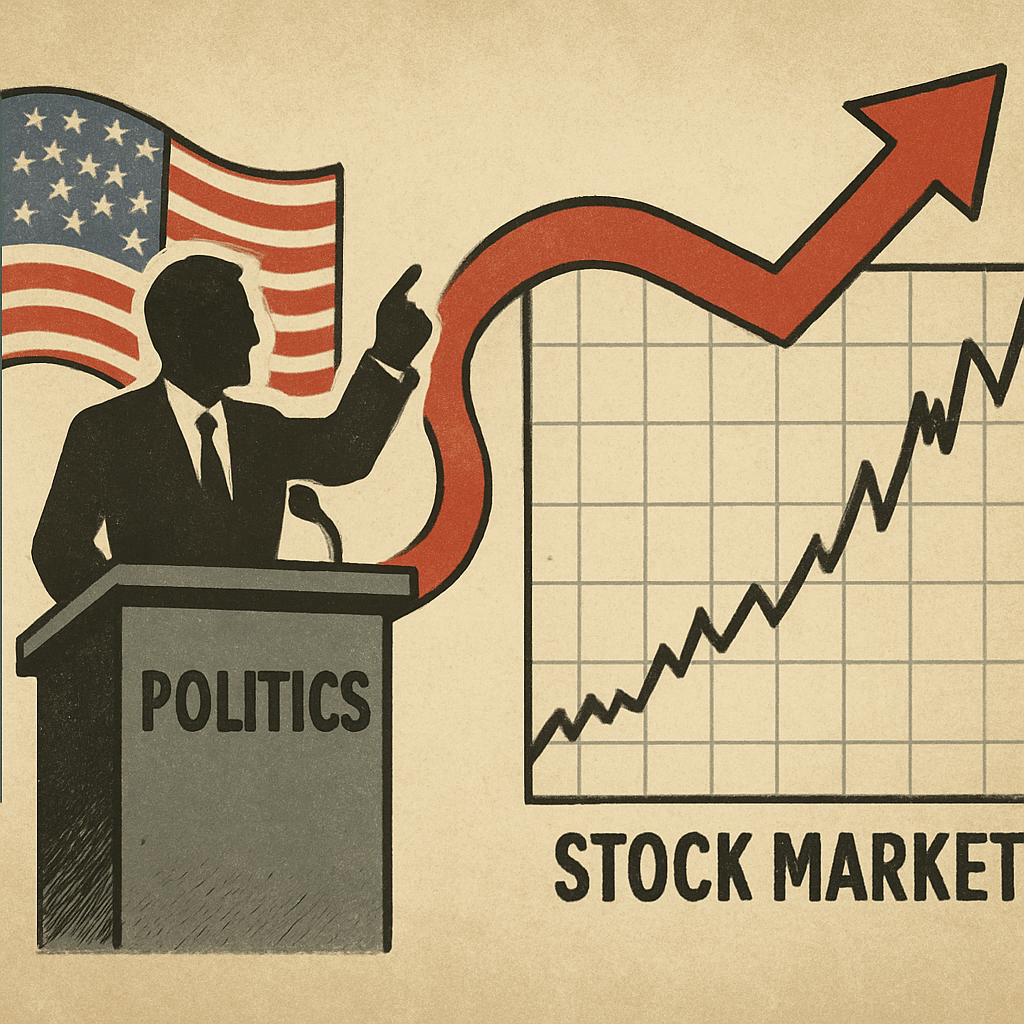
Donald Trump’s presidency was marked by significant economic policies, including tax cuts and deregulation, which had a notable impact on the stock market. As we look to 2025, understanding Trump’s potential influence requires examining several key areas.
Tax Policies
One of Trump’s hallmark policies was the corporate tax cut, which many credited with boosting stock prices. If similar tax policies are reintroduced or upheld by future administrations, we could see continued positive effects on corporate earnings and, consequently, stock prices.
The impact of tax policies on corporate behavior and investor sentiment cannot be understated. Lower corporate tax rates can enhance profitability, allowing companies to reinvest in growth initiatives, increase dividends, or undertake stock buybacks. These actions can contribute to a more favorable market environment, attracting investors seeking returns.
Tax policies also influence the competitive landscape. Lower taxes can provide domestic companies with a competitive edge over international rivals, potentially boosting market share and profitability. Investors may favor companies benefiting from such tax advantages, driving up stock valuations.
Tax policy changes can also affect consumer spending and economic growth. Tax cuts for individuals can increase disposable income, stimulating demand for goods and services. This demand can lead to higher corporate revenues, further fueling market optimism and investment.
Deregulation
Deregulation was another significant aspect of Trump’s economic agenda. Continued deregulation, particularly in sectors like energy and finance, might stimulate growth and attract investor interest, potentially driving stock market gains.
Deregulation can reduce operational costs and barriers for businesses, enabling them to operate more efficiently and profitably. In sectors like finance, deregulation can lead to increased lending and investment activities, fostering economic growth and market expansion.
The energy sector, in particular, could benefit from deregulation through increased exploration and production activities. While this may boost traditional energy sectors, the broader market trend towards sustainability could create a dynamic interplay between deregulation benefits and environmental considerations.
Investor sentiment often responds positively to deregulation, as it signals a pro-business environment conducive to growth. However, the long-term impact on markets may depend on balancing deregulation with responsible corporate governance and environmental stewardship.
Trade Policies
Trump’s trade policies, especially those involving tariffs, had mixed effects on the market. While some industries benefited, others faced challenges. Future trade negotiations and policies that echo Trump’s approach could create both opportunities and obstacles for investors.
Trade policies can reshape global supply chains, impacting costs, and competitiveness for companies. Tariffs may protect domestic industries but can also increase costs for businesses reliant on imported materials, affecting profitability and market performance.
The uncertainty surrounding trade negotiations can lead to market volatility, as investors react to changing conditions and potential disruptions. However, clear and consistent trade policies can provide stability, encouraging investment and market confidence.
Trade policy impacts are often sector-specific, with industries like manufacturing and agriculture being particularly sensitive to changes. Investors should closely monitor trade developments to identify opportunities and risks within affected sectors, adjusting strategies accordingly.
Stock Market Predictions for 2025
Predicting the stock market is inherently uncertain, but several potential scenarios can be considered based on current trends and Trump’s influence.
Bullish Scenario
In a bullish scenario, economic growth continues to rise, driven by technological innovation and favorable trade policies. If Trump’s tax and deregulation policies are maintained, corporate earnings might see a boost, leading to a thriving stock market environment.
Technological advancements could drive productivity gains, enhancing corporate profitability and market valuations. Companies leading in innovation may see substantial investor interest, pushing stock prices higher and fueling a positive market cycle.
Favorable trade policies can open new markets and reduce barriers, enhancing global business opportunities. As companies expand their international footprint, revenue growth may accelerate, contributing to overall market strength.
Investor sentiment in a bullish scenario is likely to be optimistic, with increased risk-taking and capital inflows into equities. This environment can create momentum for sustained market gains, benefiting diverse sectors and industries.
Bearish Scenario
Conversely, a bearish scenario could unfold if geopolitical tensions rise or if inflation becomes unmanageable. Protectionist trade policies reminiscent of Trump’s tenure could create market volatility, potentially leading to a downturn.
Geopolitical tensions can disrupt global trade and investment flows, leading to uncertainty and risk aversion among investors. Rising inflation may erode purchasing power and corporate profits, prompting concerns about economic stability and growth.
Protectionist policies can lead to retaliatory measures, escalating trade conflicts and affecting global supply chains. This environment may create challenges for companies reliant on international markets, impacting profitability and market performance.
In a bearish scenario, investor sentiment could turn cautious, with a shift towards safe-haven assets and reduced exposure to equities. This shift may lead to market corrections, as investors reassess risk and adjust portfolios in response to changing conditions.
Balanced Scenario
A balanced scenario might involve moderate economic growth with occasional market fluctuations. In this case, Trump’s legacy might still influence certain sectors, but overall market stability would be maintained through diversified growth strategies.
Moderate growth can provide a stable foundation for markets, with steady corporate earnings and investment opportunities. Sectors benefiting from Trump’s policies, such as energy and finance, may continue to perform well, contributing to market resilience.
Diversification strategies can help mitigate risks associated with market fluctuations, allowing investors to capture opportunities across various sectors and geographies. This approach can enhance portfolio stability and long-term returns.
Investor sentiment in a balanced scenario may be cautiously optimistic, with a focus on value and growth opportunities. This environment can foster a disciplined investment approach, emphasizing fundamentals and strategic positioning for future growth.
Key Sectors to Watch

by Vishal Davde (https://unsplash.com/@vishaldavde09)
As we look forward to 2025, certain sectors are poised to gain prominence, influenced by both market trends and Trump’s policies.
Technology
Technology remains a key driver of market growth. Companies focusing on artificial intelligence, cybersecurity, and digital transformation are likely to attract significant investment.
Artificial intelligence is set to revolutionize industries, enhancing efficiency and creating new business opportunities. Companies that leverage AI for innovation and competitive advantage may see substantial growth, drawing investor interest.
Cybersecurity is increasingly critical as digital threats evolve, with companies investing in advanced solutions to protect data and infrastructure. This sector is expected to experience robust demand, offering attractive investment prospects.
Digital transformation continues to reshape industries, with businesses adopting new technologies to enhance operations and customer experiences. Companies leading this transformation may enjoy competitive advantages, driving market performance.
Energy
The energy sector, particularly renewable energy, is expected to experience substantial growth. Continued deregulation could benefit traditional energy sectors, but the push for sustainability will likely dominate.
Renewable energy is gaining momentum as countries commit to carbon reduction and sustainability goals. Investments in solar, wind, and energy storage technologies are anticipated to drive growth, attracting investors focused on environmental impact.
Traditional energy sectors may benefit from deregulation, enhancing exploration and production activities. However, the transition to greener practices is likely to shape long-term market trends, influencing investor preferences and sector dynamics.
The energy sector’s future may depend on balancing traditional and renewable sources, with companies adapting to changing regulations and market demands. This balance can create diverse investment opportunities, appealing to different investor profiles.
Healthcare
Healthcare innovation, driven by advancements in biotechnology and pharmaceuticals, presents promising investment opportunities. Regulatory changes could further influence this sector’s performance.
Biotechnology is at the forefront of healthcare innovation, with breakthroughs in gene therapy, personalized medicine, and diagnostics. Companies leading these advancements may experience significant growth, attracting investment in innovative treatments.
Pharmaceuticals continue to play a vital role in healthcare, with ongoing research and development driving new drug discoveries. Regulatory approvals and market access can impact company performance, influencing investor sentiment.
Regulatory changes can affect healthcare dynamics, shaping market access, pricing, and competition. Investors should monitor policy developments to identify opportunities and risks within the sector, aligning strategies with evolving trends.
Conclusion
Predicting the stock market is always a challenging endeavor, influenced by numerous variables. As we approach 2025, the legacy of Donald Trump and his policies will continue to shape investor sentiment and market dynamics. By staying informed about economic trends, technological advancements, and policy changes, investors can better navigate the complexities of the stock market and make informed decisions.
In summary, while the future is uncertain, understanding key influences such as Trump’s economic policies can provide valuable insights into potential market scenarios and investment opportunities in the coming years. By staying vigilant and adaptable, investors can position themselves to capitalize on emerging trends and navigate the ever-changing financial landscape.
