

The Turbulent Market Landscape
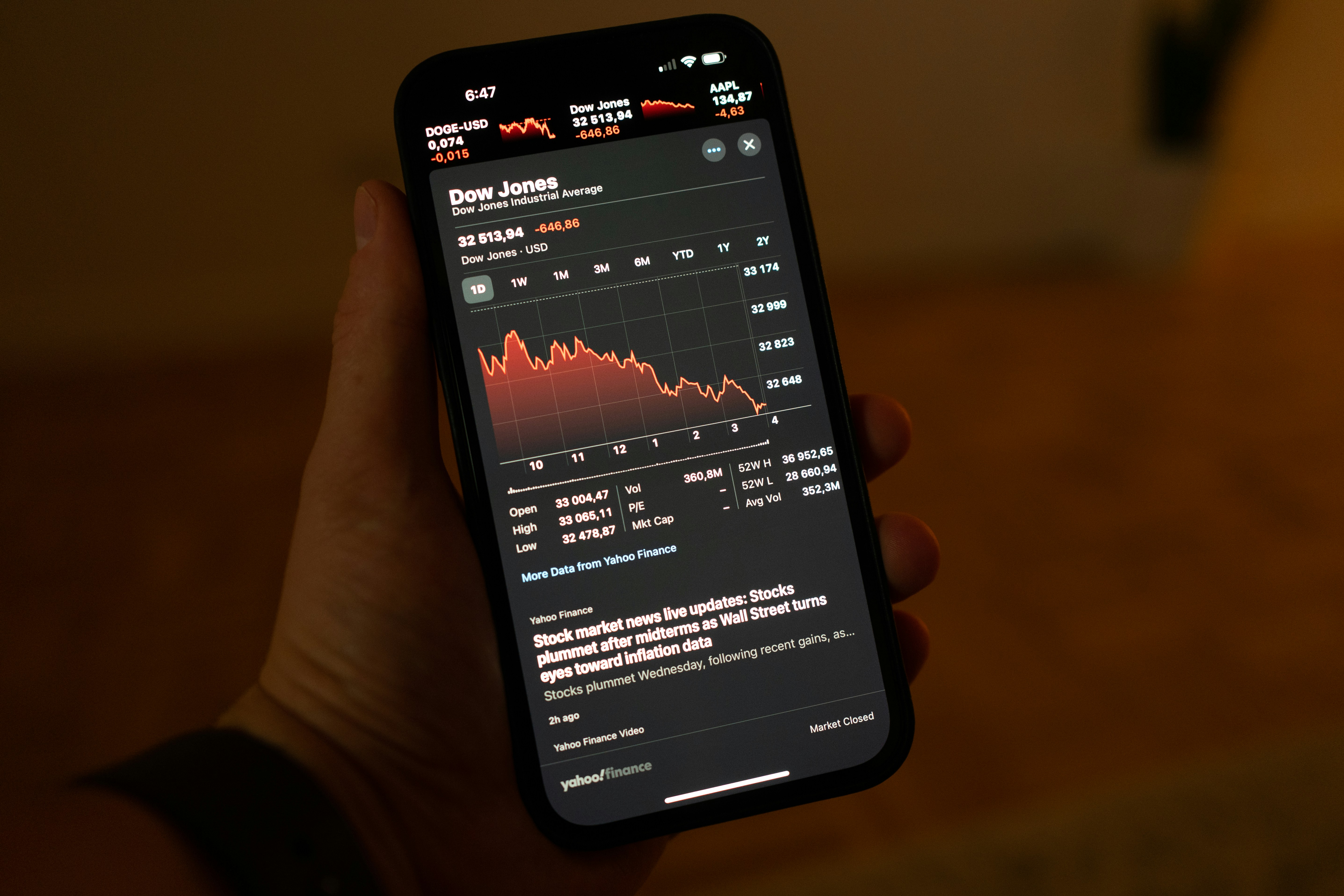
The current climate of the stock market has become increasingly tumultuous, stemming from multiple factors that have initiated a wave of uncertainty among investors. Most notably, the Dow Jones Industrial Average experienced a staggering drop of over 700 points, an event that underscores the profound impact of recent political developments, particularly those relating to tariff policies announced by former President Donald Trump. This unexpected downturn signals a broader concern regarding the implications of trade relations on market stability and financial performance.
The announcement of tariffs has left many investors grappling with the potential repercussions on various sectors, particularly those reliant on imports and exports. The concern is not merely hypothetical; rather, it stems from an apprehension that increased tariffs could lead to higher costs for consumers and businesses alike, ultimately affecting bottom lines across the board. Such scenarios inevitably stoke fears of inflation and diminished consumer confidence, further complicating the economic landscape.
As investors navigate this unpredictable terrain, their sentiment is heavily influenced by the political decisions that shape economic policies, revealing a delicate interconnection between governance and market performance. Each announcement or piece of news can drive significant swings in the indices, illustrating the precarious balance that investors must maintain. The volatility characterized by the recent events also captures the essence of a market in flux, as the ongoing saga around tariffs continues to unfold. This backdrop sets the stage for deeper analysis of how political maneuvering and economic forecasting contribute to the present atmosphere of uncertainty, leading us to consider actionable strategies for navigating these choppy waters.
Understanding the Dow’s 700-Point Drop
The recent 700-point drop in the Dow Jones Industrial Average marks a significant shift in market sentiment, influenced by several interrelated factors. Central to this market turmoil are the ongoing tariff threats articulated by former President Donald Trump, which have stirred unease among investors regarding future trade relations. The uncertainty surrounding trade policies has wider implications, affecting not only individual sectors but also the overall economic outlook.
Analysts have highlighted that investor apprehension is exacerbated by fears of an impending economic slowdown. Trump’s tariff rhetoric—suggesting potential hikes on imports and retaliatory measures from trading partners—has culminated in heightened volatility in the markets. The reality is that tariffs can lead to inflated costs for businesses, particularly those reliant on imported goods, ultimately rendering market transactions less favorable. As companies revise their earnings forecasts downward in response to increased costs, investors may pivot quickly towards defensive positions.
Adding another layer of complexity are the recent developments in artificial intelligence, especially in the tech-heavy Nasdaq. The fallout from this sector has implications that ripple through the broader market, including the Dow. Declining confidence in tech advancements directly impacts investor behavior across indices, thus contributing to the Dow’s dramatic decline.
In examining the specific impact of these factors, it is crucial to consider empirical data. For instance, trading volumes surged on the day of the drop, indicating a rush to offload shares amidst growing uncertainty. This reaction is symptomatic of a market struggling to reconcile optimistic growth forecasts with the stark reality of geopolitical tensions and their subsequent impacts on trade.
Ultimately, the convergence of Trump’s tariff policies and tech sector fluctuations presents a challenging environment for investors, leading to what can only be described as a tumultuous period for the market.
The Impacts of Trump’s Tariff Announcements
Since the introduction of tariffs by the Trump administration, numerous sectors within the economy have experienced significant upheaval. These tariffs, primarily targeting imports from various countries, have begun to shape not only corporate earnings but also the broader market forecasts. Notably, the manufacturing sector has been particularly hard hit, as rising costs for raw materials and intermediate goods create pressures on profit margins. These circumstances lead some manufacturers to reconsider their supply chains, potentially sourcing materials domestically or from countries unaffected by tariffs, albeit at potentially higher costs.
Furthermore, the technology sector has faced its own set of challenges due to tariffs. Many tech companies rely heavily on components sourced from China and other countries where tariffs have been imposed. As a direct result, investors are increasingly worried about the outlook for tech earnings, leading to fluctuations in stock prices, particularly for firms within the Nasdaq. The recent turmoil illustrates how susceptible both traditional and emerging markets are to changes in U.S. trade policy.
The broader implications of Trump’s tariffs extend beyond immediate financial impacts. Investor sentiment appears to have shifted, as uncertainty around trade policies continues to loom large. Companies are adjusting their projections in light of these tariffs, often predicting lower sales and profit growth, which in turn influences overall market performance. Moreover, analysts note that reduced consumer spending may emerge as a long-term effect, as increased prices on imported goods could deter purchases. Such shifts are crucial for shaping investor attitudes and market forecasts, particularly concerning the performance of the Dow, which reflects industrial and manufacturing strength. Overall, the cascading effects of these tariff announcements emphasize the interconnectedness of global trade and domestic economic policies.
Nasdaq’s Response: The AI Research Report Fallout
The Nasdaq composite index recently encountered significant fluctuations in response to a pivotal AI research report that has sent ripples through the technology sector. As a heavyweight component of the index, technology stocks closely guide Nasdaq’s performance. The report, which assessed current trends and future projections in the artificial intelligence landscape, offered both optimistic and pessimistic viewpoints, impacting investor sentiment markedly.
Many analysts interpreted the report as a clarion call, highlighting advancements in AI technology that promise to revolutionize various sectors, from healthcare to finance. This forward-looking perspective led to a temporary surge in stock prices of companies heavily invested in AI, including prominent firms traditionally represented in the Nasdaq composite. The report projected robust growth potential, arguing that AI could contribute trillions to the global economy, thus becoming an essential driver for tech stocks.
Conversely, the report also cast a shadow of doubt, addressing potential regulatory hurdles and ethical concerns surrounding AI development. Critics raised alarms about the readiness of existing infrastructures to support rapid advancements, emphasizing that technology stocks’ growth may not be as straightforward as anticipated. This pessimistic angle sparked a wave of caution among investors, leading to sell-offs in stocks that appeared overvalued or lacking sustainable growth strategies.
The dual nature of the report’s findings illustrates the inherent volatility in the tech sector—especially for the Nasdaq composite index, which remains sensitive to shifts in market perception. As investors weighed the merits of emerging opportunities against looming uncertainties, the turbulence underscored the complex landscape of investing in an era defined by rapid technological transformation.
Market Reactions: Investor Sentiment and Trading Patterns
The recent downturn in the financial markets, exemplified by the Dow Jones Industrial Average’s dramatic drop of 700 points, has prompted significant reactions from investors and traders alike. This slump, fueled by uncertainties surrounding Trump’s trade tariffs and its resulting economic implications, has created an environment of volatility that is becoming increasingly palpable. Investor sentiment is at a crossroads, characterized by feelings of panic and uncertainty, which tends to exacerbate market fluctuations.
As news of the Dow’s steep decline unfolded, many traders opted to reposition their assets, leading to what is widely recognized as panic selling. This behavior reflects an instinctive reaction to perceived financial risk, resulting in swift decisions to offload stocks to mitigate potential losses. The rush to sell has driven equity prices lower, leading to further declines in investor confidence. Investors, apprehensive about the worsening trade landscape and potential fallout on corporate earnings, are increasingly wary of holding on to riskier assets.
Conversely, amidst the turmoil, some market participants identify opportunities for strategic buying. This perspective is rooted in the belief that significant market corrections may offer attractive entry points for reputable stocks, especially those with strong fundamentals. Investors looking for long-term value may see the downturn as a moment to capitalize on devalued equities. Such reactions illustrate the duality of market psychology where fear and opportunism coexist, driving diverse trading patterns.
The fluctuation of the Nasdaq, particularly in relation to its AI research sector, compounds the complexities surrounding investor behavior. As tech stocks respond to both regulatory scrutiny and global competitive pressures, the sentiment reverberates across the investment community. The intertwined effects of the Dow’s decline and Nasdaq’s performance are creating a complex landscape where informed positions require careful deliberation.
Global Market Impact: How Tariff Turmoil Affects International Markets
The announcement of increased tariffs by the United States has sent shockwaves through the global market, prompting significant reactions from international stock exchanges. Traders and investors worldwide are closely monitoring the implications of these tariffs, with many expressing concern over potential impediments to global trade. The uncertainty surrounding U.S. trade policies not only affects American companies but also has a profound effect on foreign markets that rely on both imports and exports with the U.S.
In Europe, stock indices such as the FTSE 100 and the DAX have reported declines, as fears of a trade war escalate. European corporations with substantial ties to the American market face challenges that could impede their growth and profitability. Similarly, Asian markets, including the Shanghai Composite and Nikkei 225, have reacted negatively, reflecting investor anxiety about future trade negotiations and economic collaboration.
The increased tariffs raise prices on a variety of goods, which may lead to inflationary pressures across the globe. Consumer markets in countries dependent on U.S. exports could witness decreased demand, compelling governments to reconsider their trade policies in an effort to shield their economies from potential downturns. As a result, countries that were already struggling with economic recovery might experience further obstacles.
Moreover, the uncertainty surrounding tariffs will likely force nations to reassess their trade agreements and economic strategies. Emerging markets may face particular vulnerabilities as foreign direct investment stalls, impacting development and growth. The interplay of tariffs and international markets raises a complex web of challenges that policymakers must navigate to stabilize their economies.
In conclusion, the ramifications of U.S. tariff decisions extend beyond American borders, creating a ripple effect that touches global markets. The international community must remain vigilant as the situation unfolds, recognizing how interconnected the modern economy has become.
Analysts’ Perspectives on Market Instability
In light of recent economic events, financial analysts have expressed a range of perspectives regarding the impacts of President Trump’s tariffs and the fallout from AI research reports on market stability. According to John Smith, a senior market analyst at a leading investment firm, the decline of 700 points in the Dow Jones Industrial Average is indicative of broader investor concerns surrounding trade wars. “The immediate reaction to the tariffs has triggered a wave of uncertainty among investors, leading to widespread sell-offs across various sectors,” Smith noted. This sentiment illustrates the emotional reaction that often influences market dynamics, particularly during periods of anticipated economic disruption.
Conversely, Mary Johnson, an economist with a prominent research institution, highlights the potential long-term benefits of the tariffs. She posits that while the immediate effects may weigh heavily on the stock market, they could also lead to a reshaping of domestic manufacturing. “If implemented thoughtfully, tariffs could encourage a resurgence in local production, ultimately benefiting the economy in the long run,” she explained. This perspective suggests that the market may experience short-term pain, followed by a rebound as industries adjust to new trade realities.
On the subject of AI research, David Lee, a technology investment analyst, underscores the mixed market reactions stemming from advancements in this sector. “Investors are caught between excitement over innovation and concerns regarding the ethical implications surrounding AI deployment. This duality often results in volatility, as the market tries to gauge the potential risks against the rewards,” Lee remarked. Analysts indicate that such technological shifts necessitate a recalibration of investment strategies, as they can significantly influence market trajectories.
In summary, as the financial landscape continues to evolve under the pressures of tariffs and technological advancements, analysts agree that prudence and adaptability are key. With varying opinions on the immediate and long-term implications of these changes, investors are advised to stay informed and agile to mitigate risks while seeking opportunities in a tumultuous market environment.
Looking Ahead: What’s Next for Investors?
The recent market downturn, characterized by a significant drop in the Dow and subsequent fallout in tech-focused indices like the Nasdaq, has undoubtedly left many investors feeling apprehensive. However, amid this market mayhem, there are strategic pathways that investors can consider to navigate the volatility. Understanding market cycles, particularly during periods of uncertainty, becomes crucial for effective decision-making.
Diversification remains a cornerstone of risk management. By spreading investments across various asset classes—such as equities, bonds, real estate, and commodities—investors can mitigate the impact of a downturn in any single sector. In light of recent events, reassessing one’s portfolio to ensure a balanced allocation that reflects current market conditions may be prudent.
Additionally, implementing risk management strategies is vital in turbulent times. Investors should consider setting stop-loss orders, which help limit potential losses by automatically selling assets once they fall below a certain price threshold. This approach can provide a safety net during periods of extreme market fluctuations.
Furthermore, maintaining a long-term perspective is essential. While short-term volatility can be unsettling, historically, markets do recover over time. Therefore, investors may want to prioritize investments that align with their long-term financial goals rather than making impulsive decisions based on immediate market movements.
Finally, continuous education and staying informed about market trends are critical. Engaging with financial news, expert analyses, and investment webinars can equip investors with the knowledge to make informed choices. Adapting to changing market conditions will allow investors to seize opportunities that may arise even during challenging periods.
In essence, while the current landscape presents challenges, it also offers avenues for strategic investing that could lead to potential long-term benefits.
Conclusion: Navigating Uncertain Waters
The turbulent environment of the financial markets, as evidenced by the recent 700-point drop in the Dow and the repercussions of the Trump tariff decisions, underscores the intricate relationship between political actions and market forces. Each decision made at the federal level has the potential to ripple through various sectors, influencing investor sentiment and market performance. The fallout from AI research developments further complicates this landscape, as investors grapple with both the opportunities and risks introduced by rapid technological advancements.
In this climate of uncertainty, it is essential for investors to remain vigilant and well-informed. Continuous monitoring of political developments and their implications is crucial for making calculated investment choices. Furthermore, understanding market trends and behavioral finance can provide valuable insights into potential market reactions. This awareness not only aids in mitigating risks but also facilitates strategic investment planning in a volatile environment.
As the markets continue to oscillate in response to ongoing political decisions and technological innovations, adaptability must become a cornerstone of any sound investment strategy. Investors should consider diversifying their portfolios, exploring various asset classes, and capitalizing on market inefficiencies as they arise. This proactive approach will empower them to navigate the uncertain waters ahead, ultimately leading to more resilient investment outcomes. Embracing the complexities of the current market conditions is essential, enhancing the ability to respond to both challenges and opportunities effectively.